Spring has sprung, and while this means warmer weather, it’s also the start of the stink bug season.
Australia’s native stink bugs are already a nuisance in the garden, but it’s the brown marmorated stink bug (BMSB) that has authorities worried.
Dr Louise Rossiter is the NSW Department of Primary Industries and Regional Development Plant Pest and Disease Surveillance manager. She says everyone has a part to play in keeping Australia safe from invasive pests.
“Check your luggage if you have been overseas,” says Dr Rossiter. “BMSB and other live insects may be hiding in your suitcase or escape into your home after unpacking from an overseas trip. If you shop online, check for BMSB in goods which have been sent from overseas.”
The brown marmorated stink bug
So why is this particular sting bug a problem?
Native to Asia, the BMSB has become a serious pest in Europe and North America, damaging fruit, vegetable, and ornamental crops. If the BMSB were to become established in Australia, it would pose a significant threat to agriculture, gardens, and homes.
So far, a few stink bugs have been detected at ports, airports, and in imported goods. Fortunately, they haven’t established a breeding population here. Unsurprisingly, authorities want to keep it that way.
If you’re scratching your head, wondering how the BMSB is accidentally making its way to Australia, Dr Rossiter explains.
As the weather in the Northern Hemisphere grows colder, the BMSB begins searching for a warm place to hide. That means from September to April, cargo, vehicles, shipping containers, and even luggage can become hiding spots.
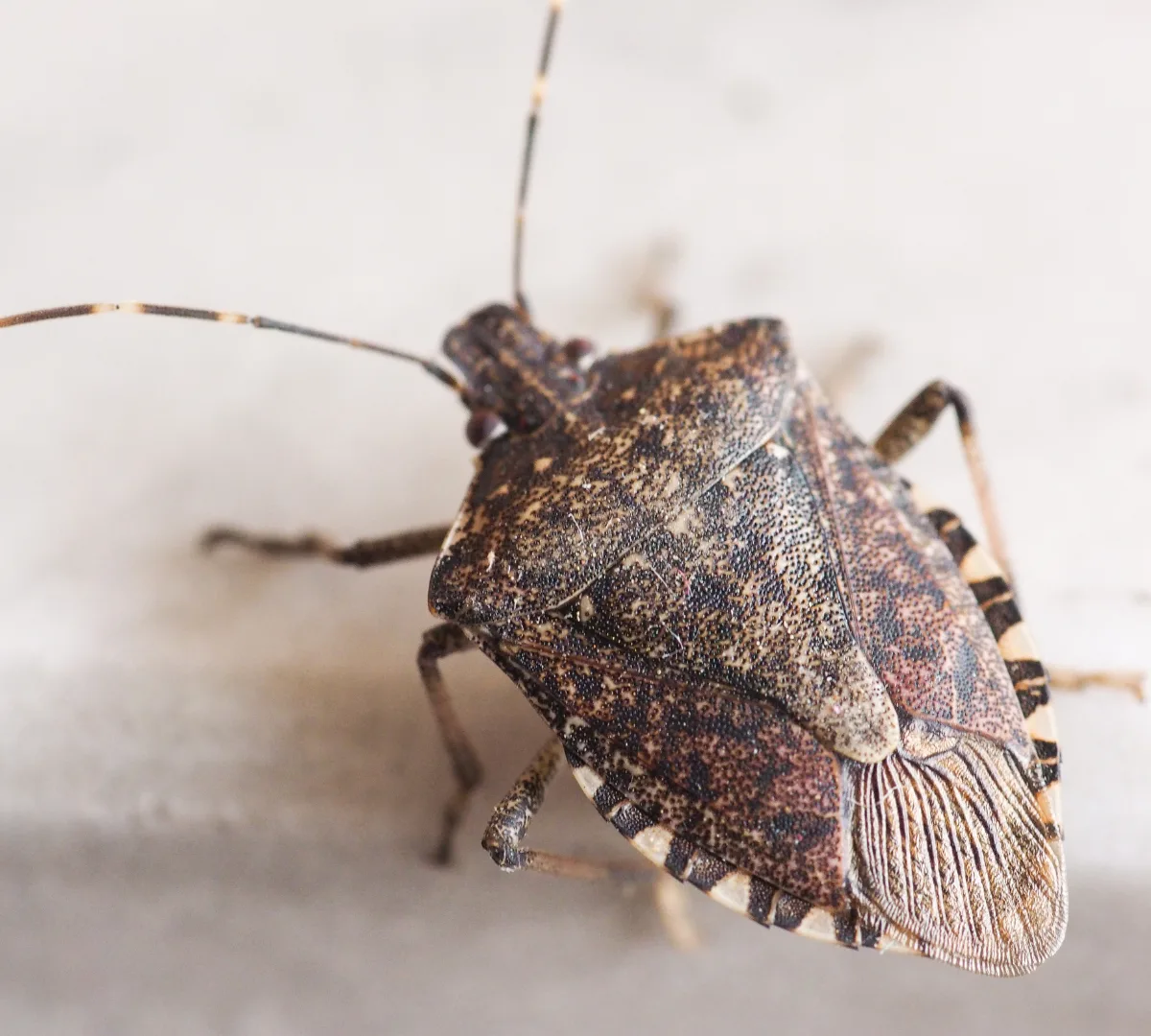
How to spot the brown marmorated stink bug
At first glance, the BMSB resembles native Australian species. But there are a few clear giveaways once you know what to look for.
The BMSB has a body shaped like a shield, measuring approximately 12 to 17 millimetres in length, and is mottled brown. The easiest way to spot it is by the clear white bands on its dark antennae.
“The bronze orange bug is commonly mistaken for the BMSB,” says Dr Rossiter. “However, this stink bug species is found only on citrus and is uniformly brown with orange antennae.”
She adds: “BMSB is more mottled with white bands on its antennae.”
If you spot one with white bands, that’s when to report it
“Catch the bug and put it in a sealed container, then report it to the Exotic Plant Pest Hotline on 1800 084 881.”
Don’t kill it
Whatever you do, don’t squish it.
Not only does squishing a stink bug release a terrible smell, but it also makes it difficult for experts to identify it. Squishing a female stink bug can also release eggs onto nearby plants, spreading the bugs even more.
If you’re dealing with a confirmed BMSM, don’t try to kill it yourself. It’s a pest that must be reported, and biosecurity teams need live bugs to confirm and stop outbreaks.
Are brown marmorated stink bugs harmful?
The good news is that while the BMSB is one of the most damaging pests to plants worldwide, it’s not harmful to humans or pets. Its mouth is made for poking into plants, not skin. So it cannot inject poison or suck blood like mosquitoes or ticks.

Related stories

Native ad body.

Native ad body.

Lawn envy is real, here’s how to have the best on the block
Native ad body.