From the donut curl to the Superman pose, your dog’s sleeping position can reveal a lot about their physical health and emotional state.
Dog behaviourist Lara Shannon, host of Animal SOS Australia, spoke with BHG about the hidden meaning of those doggy snoozing styles.
The position Fido sleeps in can affect the quality of their rest. REM (Rapid Eye Movement) sleep – the stage when they may twitch, run or woof in their dreams – is crucial for their cognitive and physical health.
How long should a dog sleep for?
As dogs typically sleep for 11-14 hours a day (longer for puppies and senior pooches), it’s easy to catch them napping! “Our pets’ sleeping positions speak volumes, if we just take the time to notice,” Lara says.
A single sleep cycle lasts for 20 minutes in dogs (compared with 90 minutes in humans). For about six of those 20 minutes, your dog will be in REM sleep. But to reach this restorative sleep cycle, dogs need to feel safe, comfortable and be undisturbed.
Dog sleeping positions and what they mean

The donut
Curled into a tight circle with legs tucked close and sometimes nose touching their hind legs, your dog is tapping into wild instincts to preserve heat and protect vital organs.
“It’s common in winter when your dog wants to keep warm or if they feel vulnerable – that’s common in new surroundings,” says Lara. “Some may also burrow into blankets or pillows to comfort or self-soothe.”

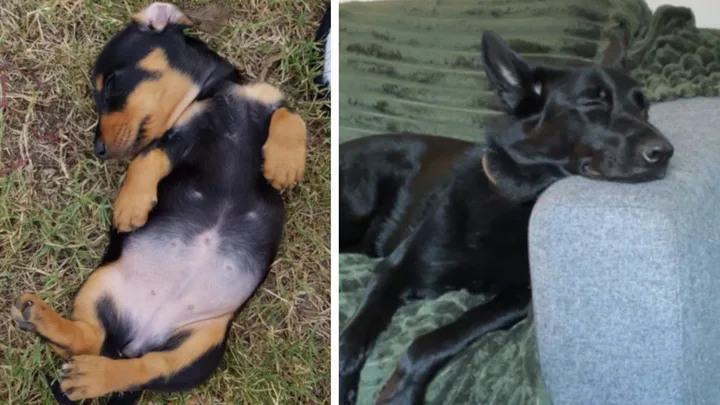
The belly up
Sprawled on their back with legs in the air and belly exposed? Looks funny, but it’s a strong sign of trust.
“If your dog has anxiety and you spot your dog sleeping belly up, it’s a great sign,” says Lara. “It shows they feel safe and content. Some dogs could be hinting at a good thigh tickle in this position!”

The lion’s pose
When dogs rest with their head on their paws like a lion or sphinx, they’re not fully relaxed. In this position, dogs may also tuck in their paws and rest their back legs on the side.
“This is not a deep-sleep pose,” explains Lara. “They’re alert and waiting to move, if needed. Think of it as a light nap between action.”

The Superman
Lying flat on their tummy with legs stretched out front and back, the Superman pose is typical in puppies and high-energy dogs that are always ready to jump into action.
“It’s also a comfortable position for naps and a great way to cool off,” adds Lara.

Side sleeper
A dog stretched out on their side with their legs extended is likely feeling safe, relaxed and comfortable in familiar surroundings. The position allows for deep sleep.
“It’s my favourite to see,” says Lara. “It shows they’re calm and comfortable.”

The cuddler
Some dogs love to sleep snuggled up against something. That can be back-to-back or even on top of their people or other pets. “It’s a sign of affection, trust and bonding,” says Lara.
Should you wake a sleeping dog?
Never disturb a sleeping dog, advises Lara. This is especially important for children, who could startle their furry companion and risk being bitten.
What kind of dog bed is best?
Sleep needs can change with age and the seasons. “Older dogs benefit from orthopaedic beds to support joints. Outdoor sleepers in winter need insulated beds with sides and blankets, while summer calls for cool, flat mats,” says Lara.
We’ve got a list of the best dog beds, ranging from older pups to diva doggies, and if you’re savvy enough, you can use our pet discount codes to score a great deal!
“And remember, a sudden shift in sleep habits, such as restlessness, sleeping more or adopting an unusual position, could signal a health issue. It may be worth checking with your vet.”

Related stories
Native ad body.

Native ad body.

Native ad body.